Home » Concrete Grouting
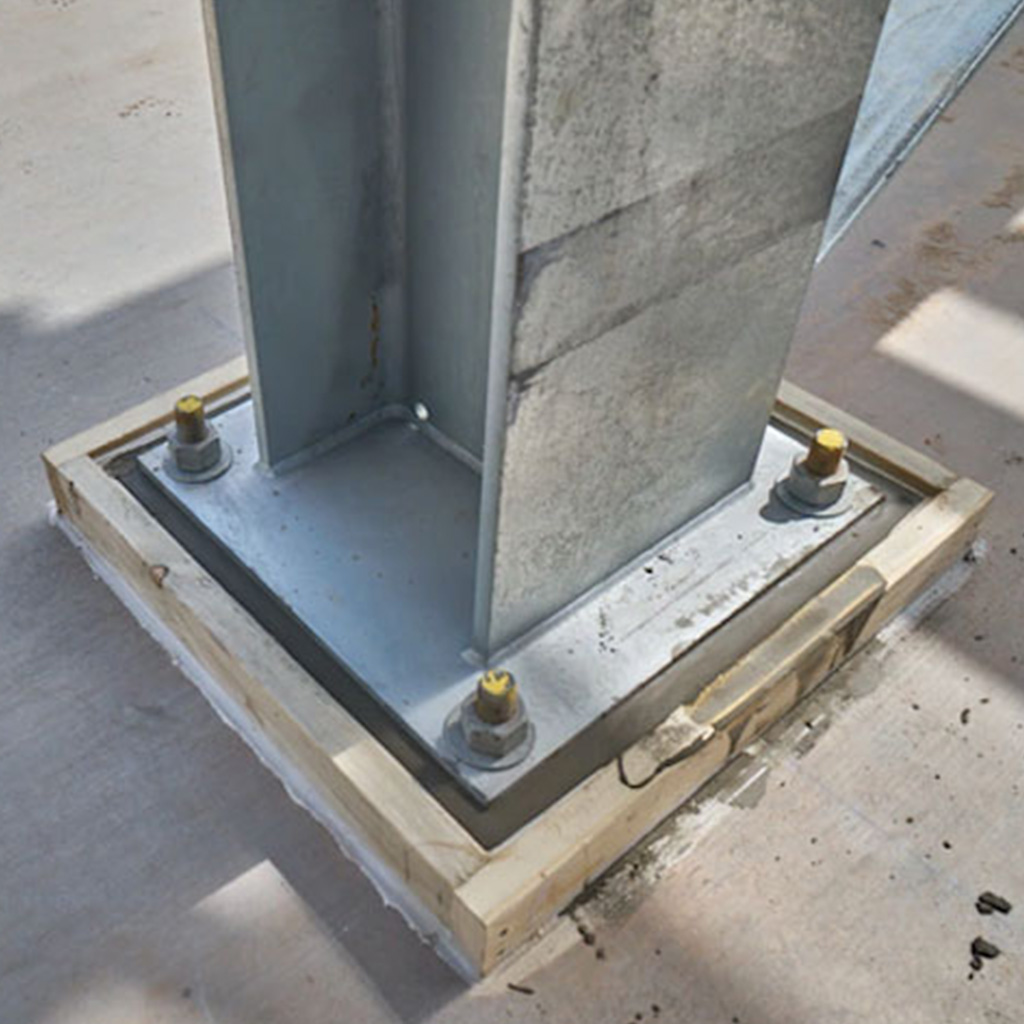
Concrete grouting often looks like a small part of a construction or repair project, but it can play an important role in how structural components are supported and how voids are filled.
Civcom Patch & Caulk provides commercial concrete grouting in Sydney for builders, contractors, project managers and commercial property teams. Whether the job involves a base plate, precast concrete, a difficult-to-access void or part of a broader repair scope, the approach starts with understanding what the grout needs to achieve.
Our team works across Sydney, the Central Coast and Newcastle and also provides related services including concrete repairs, concrete patching, joint sealing and precast panel repairs. This broader capability is useful when grouting forms part of a larger remedial or finishing package.
Concrete grout is used where a gap needs to be filled, support needs to be established, or close contact is required between structural elements.
Our commercial applications include:
Steel column and base plate grouting
Machinery and equipment bases
Remedial grouting within existing structures
Precast concrete elements and bearing areas
Filling voids around concrete components
Confined areas requiring controlled grout placement
Where a void can’t be reached effectively through conventional placement, concrete grout injection may be used to introduce material through selected access points. The method needs to account for the size and location of the void, the surrounding substrate, and the pressure used during placement.
For applications where maintaining close contact is important, shrink grout or non-shrink grout may be specified. Material selection should consider the required strength, grout depth, flow characteristics, and site conditions rather than relying on one grout product for every application.
Proper preparation also matters. Loose material, contamination or damaged concrete can affect the finished result, so the substrate needs to be assessed before grouting begins.
Fast communication
Civcom promotes a response within the hour, helping project teams move quickly when a scope needs to be reviewed or priced.
Commercial Project Focus
The service is geared towards commercial concrete work rather than generic residential grouting.
Related repair capabilities
Where damaged concrete, joints or precast elements need attention around the grouted area, those requirements can be considered as part of the wider project.

The team reviews the site, access conditions, and the area requiring grouting.

Once the scope is understood, Civcom provides a clear quote based on the work required.

The grouting work is scheduled to suit the project programme and site access.

The appropriate grout and installation approach are determined according to the application and project requirements.

The area is prepared and the grout is installed with attention to placement, coverage and surrounding concrete.

The completed area is reviewed and any relevant curing or post-installation requirements can be discussed with the project team.
If your project requires concrete grouting, concrete grout injection or shrink grout, send Civcom Patch & Caulk the available drawings, photos, specifications and site details.
Our team can review the scope and discuss an appropriate approach for your commercial construction or remedial project.
Contact Civcom Patch & Caulk today to discuss concrete grouting in Sydney and request a quote.
Commercial concrete grouting in Sydney is usually priced around grout volume, access, pour depth, preparation and the product specified for the job. A base plate with clear access can be straightforward, while deep pours, confined voids or grout injection can require extra setup and labour. Drawings, plate dimensions and photos normally give us enough information for an initial review. Where access or the void itself is unclear, a site visit helps confirm the concrete grouting scope before a final quote is prepared.
Non-shrink grout is commonly used under steel base plates where the gap between the plate and concrete needs to be filled without losing contact as the grout cures. It helps create continuous bearing beneath columns, posts and structural steelwork. The correct non-shrink grout depends on the plate clearance, pour depth, required strength and project specification. Before placement, the concrete base also needs to be sound and properly prepared so the grout can flow beneath the plate and fill the intended area without avoidable voids.
Concrete grout injection can be useful where a void cannot be filled properly by pouring from an open edge. The grout is introduced through selected access points so the material can move through the concealed space in a controlled way. This method may suit voids around concrete elements, restricted cavities and some remedial grouting work. The size of the void, surrounding concrete, possible escape points and injection pressure all need to be considered before concrete grout injection is chosen as the placement method.
Machinery base plate grouting normally requires a grout that can provide close bearing, suitable strength and stable support beneath the equipment. Non-shrink cementitious grout is common for many applications, while some heavily loaded or vibration-sensitive machinery bases may require an epoxy grout system. The choice depends on grout depth, operating loads, vibration, clearance and the project specification. Before machinery base plate grouting begins, the foundation and underside of the plate should also be checked so the selected grout can be placed continuously and without trapped voids.
Non-shrink grout curing time depends on the grout product, temperature, pour depth and the strength required before loading. High-early-strength products can develop usable strength relatively quickly, but columns, machinery and structural components should not be loaded simply because the surface feels hard. The product data and project specification should determine the loading time. If the construction programme depends on an early handover, tell us before the concrete grouting work begins so the grout selection and sequencing can be planned around the required return-to-service date.
Concrete grouting can be used around precast concrete panels where bearing areas, panel pockets, connection zones or local voids need to be filled. The exact approach depends on the detail shown in the drawings and how the grout can be introduced into the space. Where the surrounding panel has chipped edges, spalling or damaged concrete, those defects should be addressed before or alongside the grouting. Civcom can coordinate concrete grouting with concrete repairs where both items form part of the same precast repair scope.
© 2026 All rights reserved by Civcom Patch & Caulk | ABN: 15 618 009 162